Monday Beauty: A Display Font That Elevates Editorial Design
Monday Beauty for Lifestyle Blog Headers and Editorial Layouts
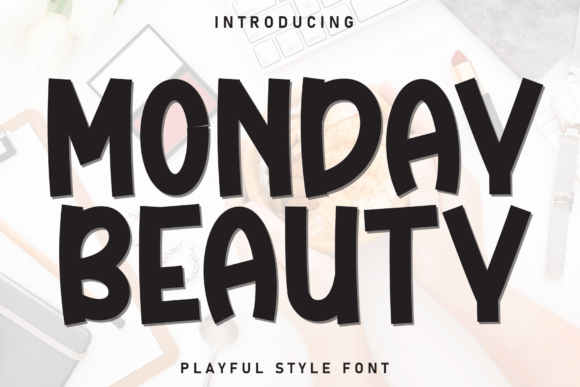
Monday Beauty is a display font that feels like a warm welcome in any editorial design. With its casual yet neat structure, it brings a friendly, approachable vibe to content layouts. When I recently redesigned the header for a lifestyle blog, Monday Beauty stood out as the perfect choice. Its clean lines and subtle rounded edges gave the blog a modern yet inviting feel, making it ideal for a publication that blends personal storytelling with curated content.
Using Monday Beauty in blog headers or article titles adds a touch of personality without overwhelming the reader. The balanced letterforms ensure that even longer titles remain readable, while the font’s rhythm supports visual hierarchy. It’s a great fit for lifestyle blogs, recipe ebooks, or digital magazines where tone and typography work together to create a cohesive brand identity.
Monday Beauty in Recipe Ebooks and Digital Magazine Covers
For a recent project, I designed a recipe ebook focused on seasonal cooking. Choosing the right font for the cover was crucial — it had to reflect both the warmth of home-cooked meals and the modernity of a digital format. Monday Beauty proved to be an excellent match. Its simplicity paired well with the vibrant images used in the cookbook, while the friendly tone of the font helped set the mood for an easy-to-read, engaging experience.
When used on digital magazine covers or print publications, Monday Beauty maintains clarity across different platforms. Whether viewed on a mobile screen or printed in high resolution, the font retains its elegance and readability. It’s particularly effective when paired with a complementary serif or sans serif font for body text, ensuring that the editorial design remains visually balanced and accessible.
Monday Beauty for Newsletter Graphics and Pull Quotes
In a recent newsletter redesign for a wellness brand, I experimented with using Monday Beauty for pull quotes and section headings. The font’s subtle character made it ideal for highlighting key messages without distracting from the content. The rounded edges softened the impact of the text, creating a more approachable tone that resonated with the brand’s audience.
Monday Beauty works especially well in newsletter graphics, where visual interest needs to be maintained without sacrificing readability. It can be used for headlines, callout boxes, or decorative accents, adding a sense of cohesion to the layout. However, it’s best reserved for shorter texts rather than dense paragraphs or small captions, where its expressive nature might compromise legibility.
Monday Beauty in Coaching Workbooks and Printable Planners
I also tested Monday Beauty in a coaching workbook designed for time management and goal setting. The font’s clean and structured appearance supported the organized nature of the content, while its friendly tone helped create a more engaging learning experience. Used for chapter openers, section headings, and printable worksheets, Monday Beauty added a professional yet personable touch to the workbook’s design.
For printable planners or course PDFs, Monday Beauty ensures consistency across all pages. Its balanced letterforms make it easy to read in both digital and print formats, and its subtle character helps maintain a calm, focused mood throughout the content. It’s a versatile font that adapts well to various editorial structures while maintaining a consistent visual identity.
Monday Beauty for Branding and Content Consistency
As a designer, I’ve found that Monday Beauty contributes significantly to brand consistency in content layouts. Whether used for a wedding guide, a creator newsletter, or a digital magazine, the font reinforces a unified editorial voice. Its ability to blend simplicity with personality makes it a valuable asset in building a strong brand identity through typography.
Before incorporating Monday Beauty into any publication, it’s important to check the available styles, ligatures, and multilingual support. Ensuring that the font aligns with the project’s needs — whether for commercial use, digital downloads, or print materials — will help maximize its effectiveness in editorial design. Pairing it with a readable serif or sans serif font for body text can further enhance the overall readability and visual balance of the layout.